
European Commission highlights the impact of MeDiTATe project: advancing personalised cardiovascular care through Digital Twins
 Written by rbfLAB on
The European Commission has published on CORDIS a new feature article highlighting the achievements and impact of MeDiTATe – Medical Digital Twin for Aneurysm prevention and Treatment, an EU-funded project coordinated by Prof. Marco Evangelos Biancolini, Principal Investigator at the University of Rome Tor Vergata.
Launched in 2020, MeDiTATe aimed to develop advanced computational models, known as Digital Twins, to improve the prevention and treatment of aortic aneurysms through personalised, data-driven approaches. The project brought together experts in engineering, medicine, simulation, and digital technologies to create a unified framework combining advanced medical imaging, high-fidelity simulations, and innovative modelling techniques.
A key achievement of the project was the development of highly accurate and efficient Digital Twins capable of reproducing patient-specific blood flow and vessel wall behaviour. These models were validated in close collaboration with clinicians and experimental platforms, enabling healthcare professionals to explore different treatment scenarios in a virtual environment and supporting safer and more informed decision-making in complex vascular procedures.
From research innovation to clinical applications
MeDiTATe contributed to the development of several technologies enabling real-time cardiovascular simulations, including the prediction of blood flow and arterial wall stresses for individual patients. These methodologies were further refined through collaborations with industrial partners, including PrediSurge, a French medical technology company specialising in personalised simulation for endovascular procedures.
“The collaboration helped PrediSurge strengthen its scientific credibility, expand its simulation capabilities and reinforce its position within the European digital health ecosystem,” stated Prof. Marco Evangelos Biancolini, Professor at the University of Rome Tor Vergata, MeDiTATe coordinator, and founder of RBF Morph.
Within the project, RBF Morph further advanced its mesh morphing methodologies, integrating them into high-fidelity multiphysics workflows combined with reduced-order modelling and AI-enhanced simulation pipelines. These developments contributed to strengthening the role of simulation-driven innovation within the European digital healthcare ecosystem.LivGemini: transforming research into innovation
One of the most significant outcomes for the University of Rome Tor Vergata is LivGemini, a start-up founded during the project by Early Stage Researcher Leonardo Geronzi.
LivGemini translates high-fidelity cardiovascular simulation models into interactive and deployable digital platforms for surgical planning and personalised treatment. By providing clinicians with accessible, data-driven decision-support tools, the company represents a concrete example of how advanced academic research can evolve into market-oriented innovation.
“LivGemini has already received national recognition in Italy, demonstrating how EU-funded doctoral research can evolve into impactful innovation and entrepreneurship,” commented Prof. Biancolini.
Training the next generation of digital health researchers
Beyond technological achievements, MeDiTATe also had a strong educational impact. The project trained 14 Early Stage Researchers, contributing to the development of a new generation of scientists and engineers working at the intersection of computational modelling, biomedical engineering, and digital healthcare.
The scientific and technological maturity achieved through MeDiTATe has also paved the way for new follow-up initiatives, including PANDORA, ROMed2VR, and SafeBot4Twin, extending the project’s impact towards safe AI integration, immersive visualisation, and broader clinical adoption of Digital Twin technologies.
Furthermore, MeDiTATe directly inspired the creation of the course “Digital Models: Modelling and Applications”, included in the international Master’s programme “Technology and Management of New Frontiers” at the University of Rome Tor Vergata. The course brings MeDiTATe methodologies into higher education, training future engineers and innovation managers in the field of simulation-based digital medicine.
Through its scientific results, entrepreneurial outcomes, and educational legacy, MeDiTATe has brought personalised patient care one step closer to clinical practice, demonstrating the transformative potential of Digital Twins in cardiovascular medicine.
rbfLAB
rbfLAB is a research group located in Rome, at the University of Rome 'Tor Vergata'.
Explore more like this
Tor Vergata Innovation Day 2026: Research, Innovation and New Connections
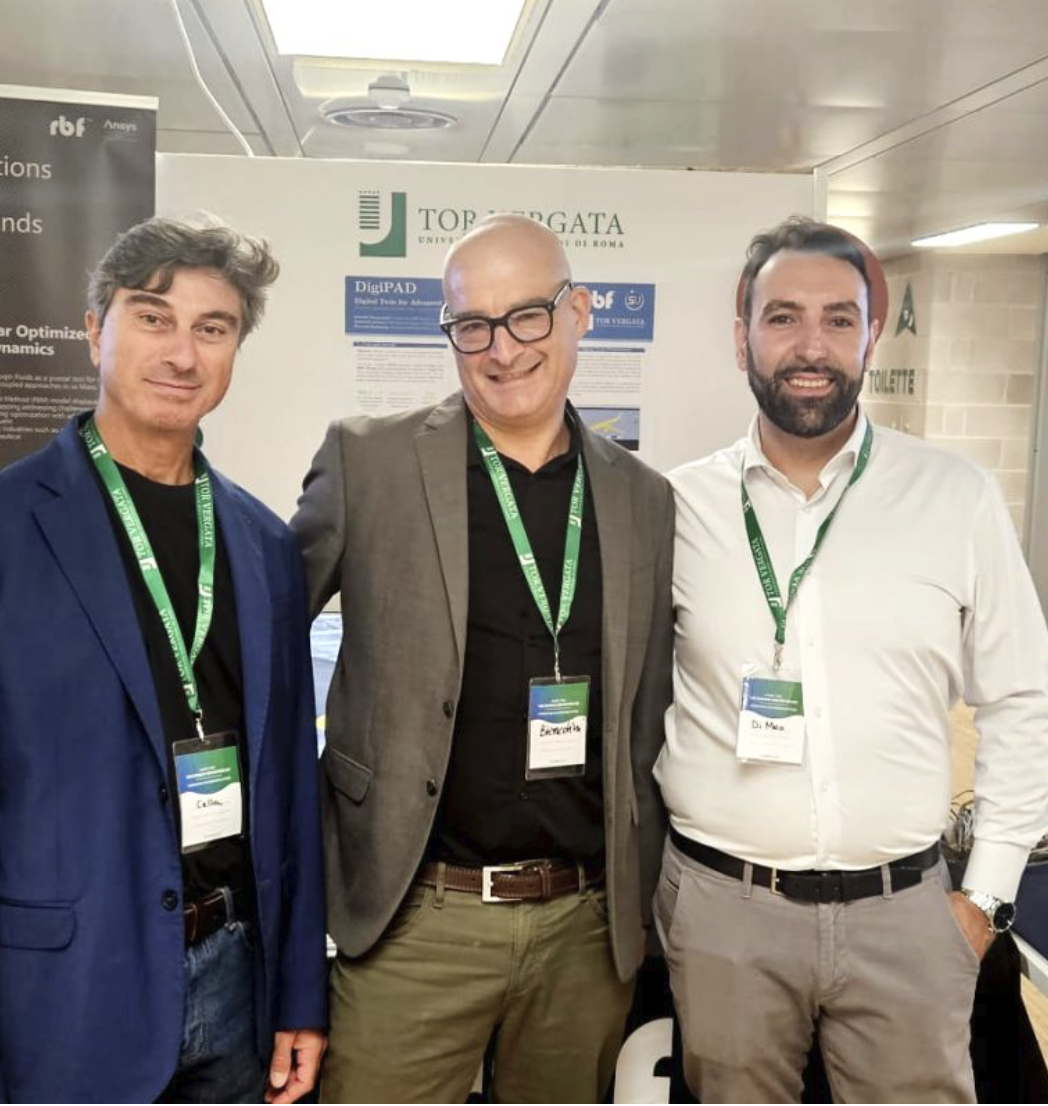
On 7 October 2026, the University of Rome Tor Vergata hosted the Tor Vergata Innovation Day, bringing together researchers, companies, students, institutions and other stakeholders to highlight the University’s contribution to research, technological innovation and the development of new opportunities for collaboration.
University of Rome Tor Vergata at SOFT 2026: research contributions to fusion technology
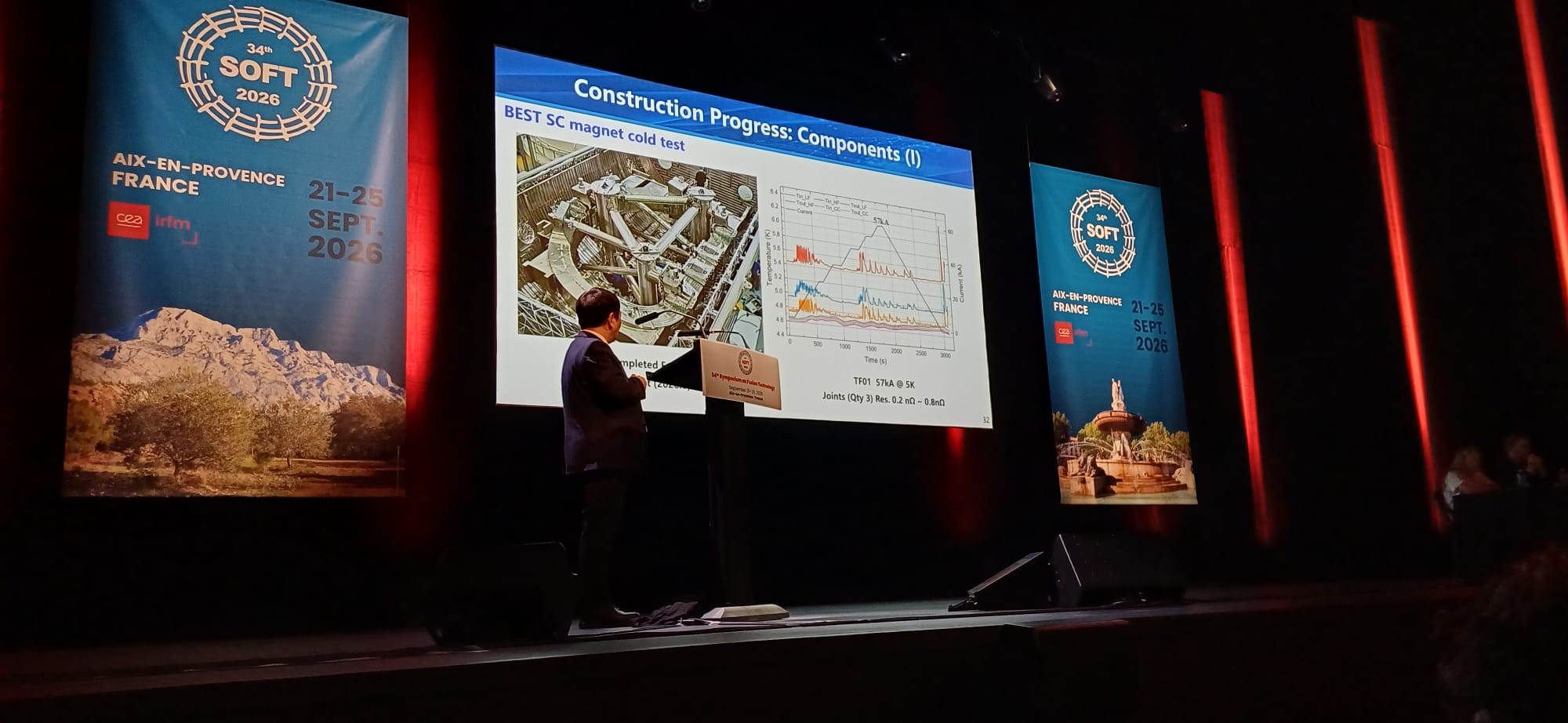
The University of Rome Tor Vergata took part in the 34th Symposium on Fusion Technology (SOFT 2026), held in Aix-en-Provence, France, from 21 to 25 September 2026. The symposium brought together researchers, engineers and industry experts from the international fusion community to present recent advances and discuss the technological challenges involved in the development of future fusion systems.

Roma Tor Vergata takes second place at Formula SAE Italy 2026
The University of Rome Tor Vergata achieved an outstanding result at the 21st edition of Formula SAE Italy, held at the “R. Paletti” Autodrome in Varano de’ Melegari, in the province of Parma.
Comments