
University of Rome Tor Vergata at SOFT 2026: research contributions to fusion technology
 Written by rbfLAB on
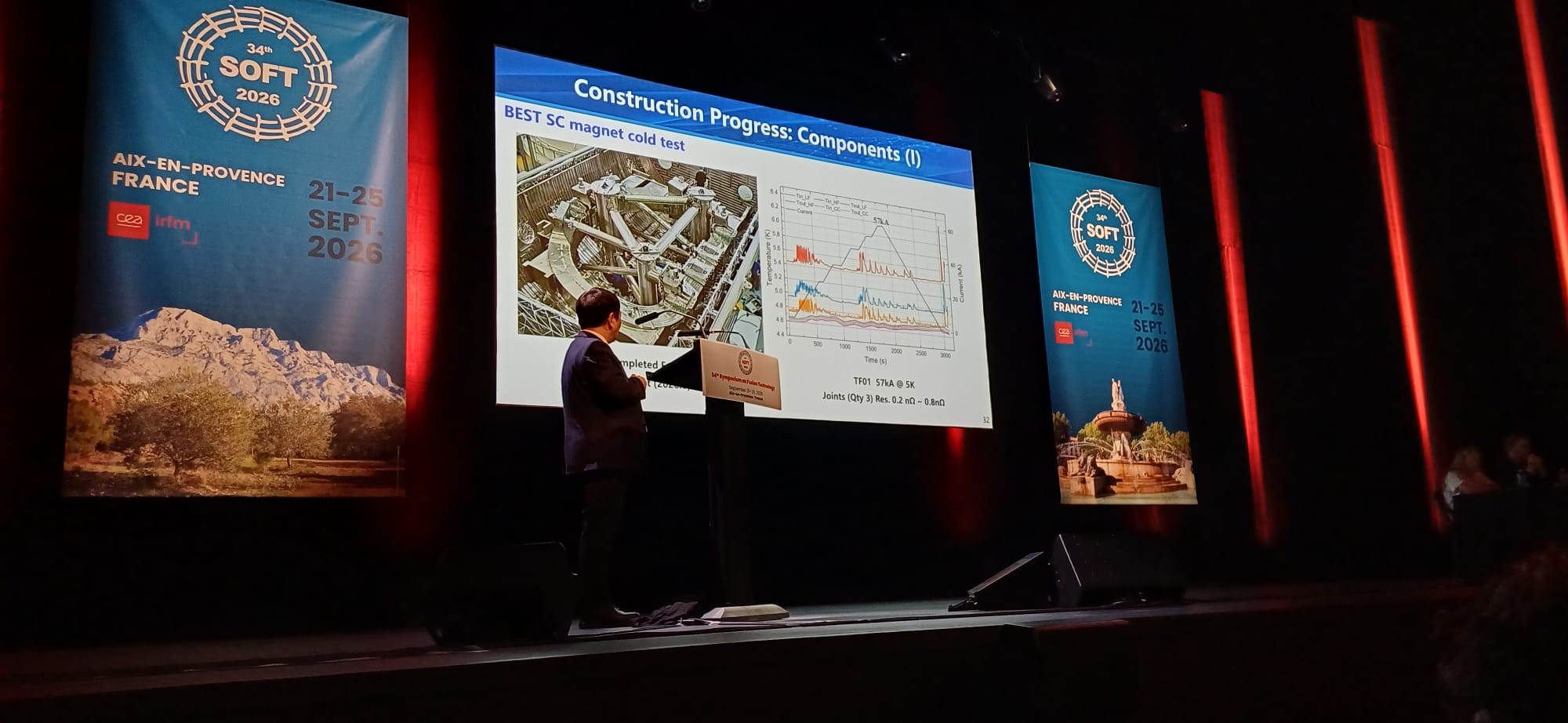
The University of Rome Tor Vergata took part in the 34th Symposium on Fusion Technology (SOFT 2026), held in Aix-en-Provence, France, from 21 to 25 September 2026. The symposium brought together researchers, engineers and industry experts from the international fusion community to present recent advances and discuss the technological challenges involved in the development of future fusion systems.
The University was represented at the event through research contributions addressing the design, simulation and verification of critical components for fusion devices. In particular, two papers were presented in the F. Magnets, Cryogenics and Electrical Systems session, focusing on components and manufacturing processes relevant to the DEMO fusion reactor.
Multiscale analysis of the DEMO feeder busbar clamping system
Corrado Groth contributed poster BO-086, entitled “Multiscale Electromagnetic–Structural Workflow for the Optimisation and Verification of DEMO Feeder Busbar Clamping System”.
The contribution addressed the analysis and optimisation of the clamping system used for the busbars of the DEMO feeder system. These components are required to withstand demanding electromagnetic and mechanical loads, making their design and verification a complex multiphysics problem.
The work proposed a multiscale electromagnetic–structural workflow to support both the optimisation and verification of the clamping system. By combining electromagnetic and structural analyses, the approach makes it possible to investigate the interaction between the electromagnetic loads generated during operation and the resulting structural response.
The study highlights the importance of integrated computational workflows for the design of critical fusion components, where electromagnetic, mechanical and geometrical aspects need to be considered together to achieve reliable and robust solutions.
Residual stresses in Central Solenoid layers
On 24 September, Andrea Chiappa presented poster BO-079, entitled “Evaluation of Residual Stresses in Central Solenoid Layers Induced by the Manufacturing Process”.
The contribution focused on the Central Solenoid, one of the key components of a fusion reactor, and specifically on the residual stresses generated during the manufacturing process of its layers.
Residual stresses can have a significant influence on the mechanical behaviour and structural integrity of complex components. Understanding their distribution and magnitude is therefore an important aspect of the design and manufacturing of fusion systems.
The study presented at SOFT 2026 investigated the stresses induced by the manufacturing process in the different layers of the Central Solenoid, providing information that can contribute to a more accurate assessment of the component’s structural behaviour and to the optimisation of its manufacturing and design processes.
The two contributions addressed different but complementary aspects of the engineering challenges associated with future fusion systems: from the multiphysics analysis and optimisation of DEMO feeder components to the assessment of manufacturing-induced stresses in the Central Solenoid.
The participation of researchers from the University of Rome Tor Vergata provided an opportunity to present ongoing research to the international fusion technology community, exchange expertise with researchers and engineers from other institutions, and discuss approaches to the complex computational and engineering problems involved in the development of next-generation fusion devices.
rbfLAB
rbfLAB is a research group located in Rome, at the University of Rome 'Tor Vergata'.
Explore more like this

Roma Tor Vergata takes second place at Formula SAE Italy 2026
The University of Rome Tor Vergata achieved an outstanding result at the 21st edition of Formula SAE Italy, held at the “R. Paletti” Autodrome in Varano de’ Melegari, in the province of Parma.
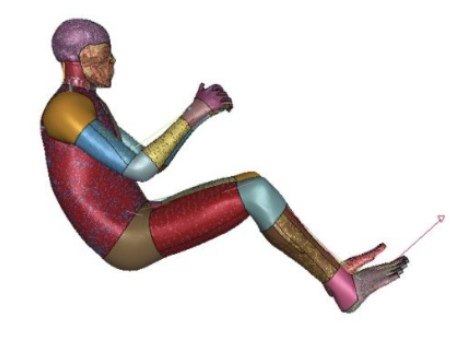
Master's Thesis Explores Reduced-Order Modeling for Human Body Articulation
A new Master’s thesis developed at the University of Rome Tor Vergata investigates advanced methodologies for the efficient articulation of digital human body models through the integration of reduced-order modeling and mesh morphing techniques.
European Commission highlights the impact of MeDiTATe project: advancing personalised cardiovascular care through Digital Twins
The European Commission has published on CORDIS a new feature article highlighting the achievements and impact of MeDiTATe – Medical Digital Twin for Aneurysm prevention and Treatment, an EU-funded project coordinated by Prof. Marco Evangelos Biancolini, Principal Investigator at the University of Rome Tor Vergata.
Comments