
New Publication: Computational Simulation of Shape-Memory Polymer Structures via Finite Elements and Mesh Morphing
 Written by rbfLAB on
We are pleased to announce the publication of our latest work in Smart Materials and Structures:
Computational simulation of shape memory polymer structures via finite elements and mesh morphing
by Corrado Groth, Andrea Chiappa, Marco Evangelos Biancolini, and Giulia Scalet
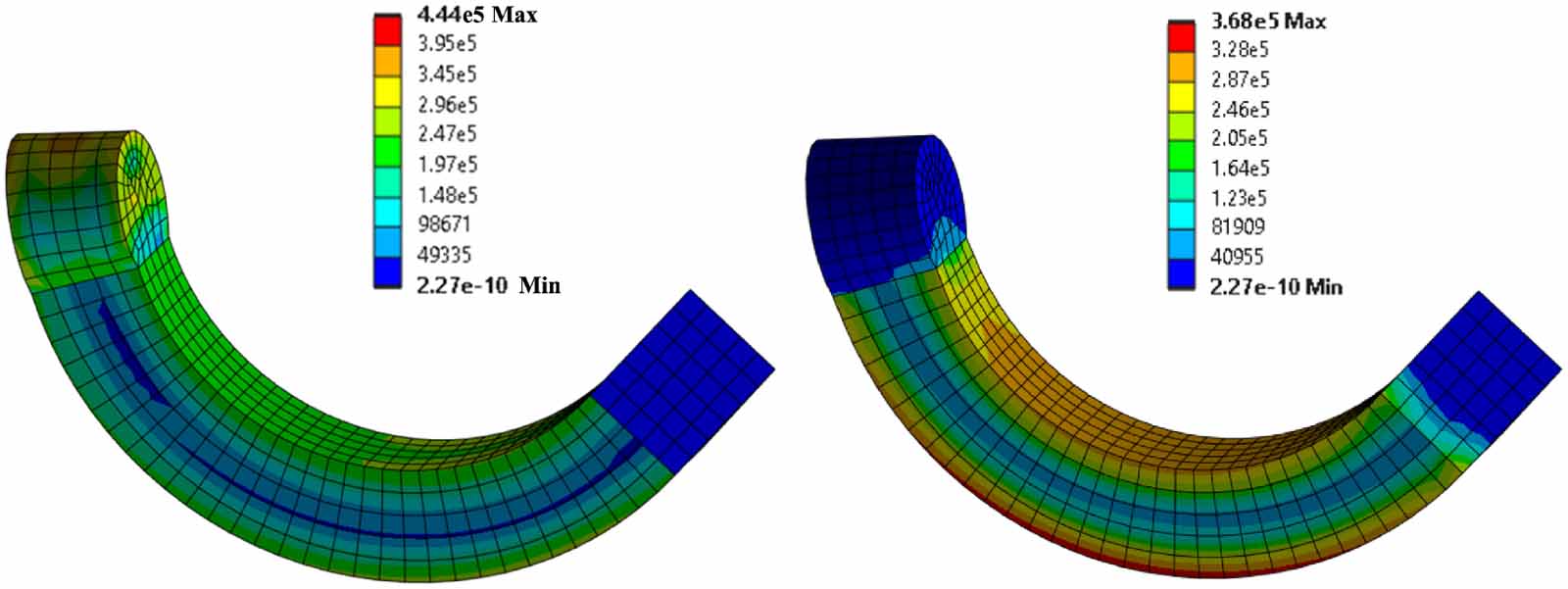
Shape-memory polymers (SMPs) are an important class of smart materials capable of recovering a permanent shape from a temporary, deformed configuration when activated by external stimuli. The shape-programming step, which fixes the temporary shape, is central to this functionality but remains difficult to model accurately. Traditional computational approaches often rely on defining complex boundary conditions through trial-and-error procedures, making simulations laborious, time-intensive, and prone to discrepancies between the programmed and intended shapes.
In this study, we present a novel computational framework that integrates finite element analysis with radial basis function (RBF) mesh morphing to directly prescribe the temporary shape of SMP structures. By bypassing the need for intricate loading conditions, the method significantly streamlines the simulation process, reduces computational cost, and improves accuracy in reproducing recovery behavior. The approach was validated on a representative 4D-printed structure, demonstrating its robustness and effectiveness.
The methodology is not limited to one-way SMPs but can be extended to other shape memory systems, offering a versatile and efficient tool for the design and optimization of SMP-based components. Future developments will focus on extending the framework to more complex cases involving large deformations and contact interactions.
The article is available in open access at Smart Materials and Structures.
rbfLAB
rbfLAB is a research group located in Rome, at the University of Rome 'Tor Vergata'.
Explore more like this

Roma Tor Vergata takes second place at Formula SAE Italy 2026
The University of Rome Tor Vergata achieved an outstanding result at the 21st edition of Formula SAE Italy, held at the “R. Paletti” Autodrome in Varano de’ Melegari, in the province of Parma.
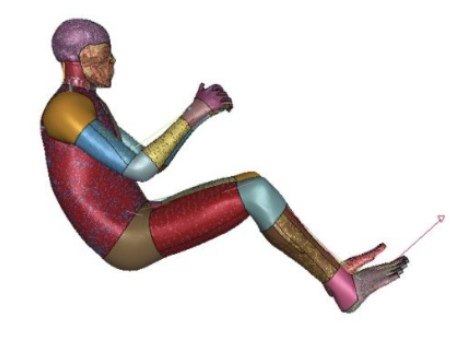
Master's Thesis Explores Reduced-Order Modeling for Human Body Articulation
A new Master’s thesis developed at the University of Rome Tor Vergata investigates advanced methodologies for the efficient articulation of digital human body models through the integration of reduced-order modeling and mesh morphing techniques.

European Commission highlights the impact of MeDiTATe project: advancing personalised cardiovascular care through Digital Twins
The European Commission has published on CORDIS a new feature article highlighting the achievements and impact of MeDiTATe – Medical Digital Twin for Aneurysm prevention and Treatment, an EU-funded project coordinated by Prof. Marco Evangelos Biancolini, Principal Investigator at the University of Rome Tor Vergata.
Comments