
High-Fidelity Simulation and Shape Optimization in Sailing: The Scientific Contributions of rbfLAB and VOILAb
 Written by rbfLAB on
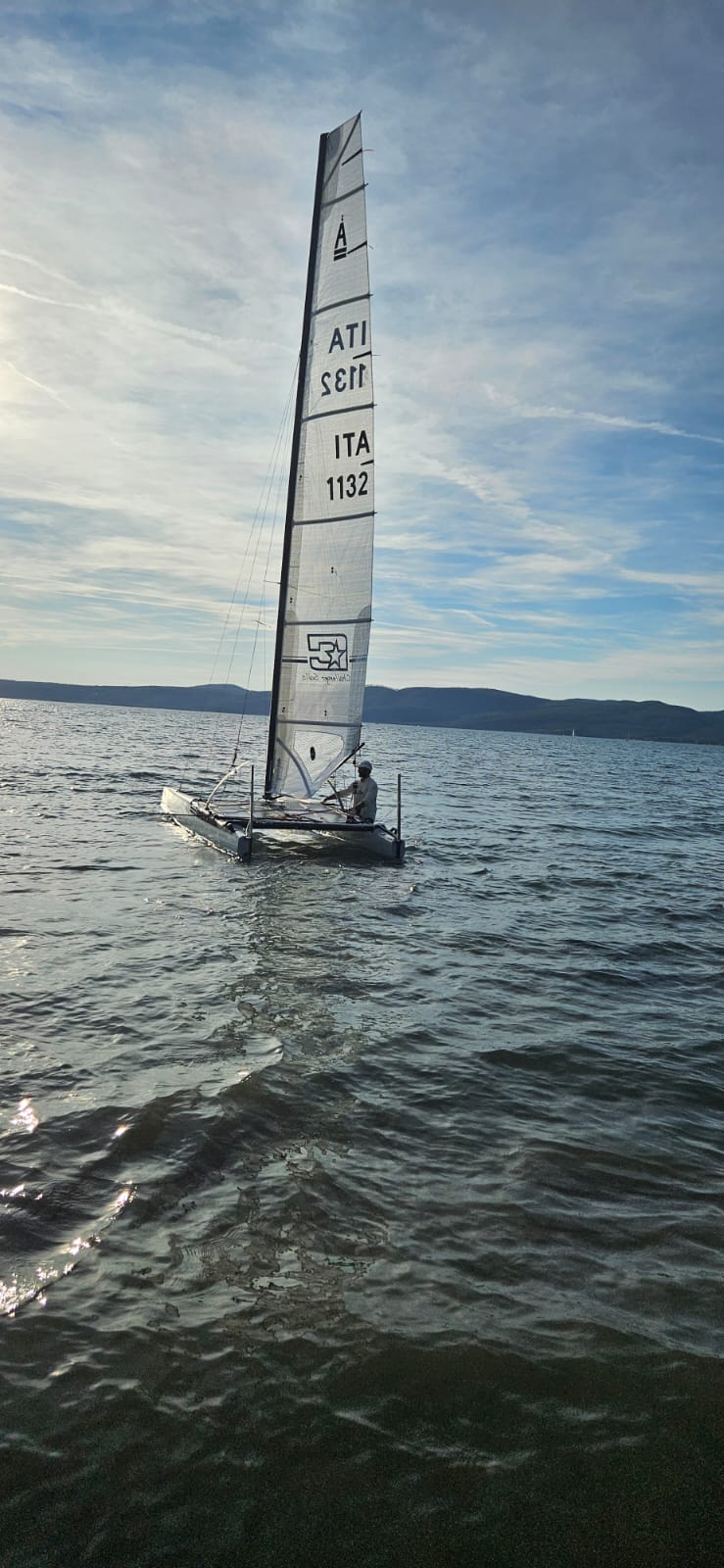
Since 2014, Prof. Marco Evangelos Biancolini and Prof. Ignazio Maria Viola have shared a common scientific vision: advancing nautical engineering through high-fidelity numerical simulation and transforming cutting-edge research into practical tools for the marine industry.
Beyond their research activities, both scholars serve on the Editorial Board of The Journal of Sailing Technology, one of the world’s leading international journals dedicated to sailing science and technology, and of which Prof Viola has been the Editor-in-Chief for ten years. The journal has become a global reference for research on sailing performance, wind-assisted propulsion, hydrodynamics, advanced materials, and computational methods applied to marine engineering.
Leading, respectively, the rbfLAB and VOILAb research groups, Prof. Biancolini and Prof. Viola established a highly productive collaboration that, between 2014 and 2018 alone, resulted in six joint scientific publications devoted to sail aerodynamics, shape optimization, computational fluid dynamics (CFD), and advanced design methodologies.
Among their contributions, the paper “Sails Trim Optimisation Using CFD and RBF Mesh Morphing”, published in Computers & Fluids, has become a landmark reference in the field. The study introduced the integration of Radial Basis Function (RBF) mesh morphing with CFD simulations for sail trim optimization, demonstrating how advanced geometric parameterization can drastically reduce computational costs while maintaining high-fidelity aerodynamic predictions. The methodology further incorporated Design of Experiments (DOE) and metamodeling techniques to efficiently explore large design spaces and identify optimal sail configurations.
Subsequent investigations extended these concepts by coupling CFD analyses with Velocity Prediction Programs (VPPs), enabling the optimization of rigid wing sails and advanced sailing configurations under realistic operating conditions. Their work progressively evolved from isolated aerodynamic analyses to integrated digital design environments capable of linking geometry parameterization, fluid dynamics, and vessel performance prediction.
The scientific journey of rbfLAB and Voilab demonstrates how advanced simulation technologies can become powerful enablers for industrial innovation. By consistently pursuing scientific rigor while maintaining a strong focus on practical applicability, Prof. Biancolini and Prof. Viola have significantly contributed to the evolution of simulation-driven nautical engineering, helping the marine sector move toward a new generation of computationally driven, performance-oriented, and industrially relevant vessel design methodologies.
rbfLAB
rbfLAB is a research group located in Rome, at the University of Rome 'Tor Vergata'.
Explore more like this

Roma Tor Vergata takes second place at Formula SAE Italy 2026
The University of Rome Tor Vergata achieved an outstanding result at the 21st edition of Formula SAE Italy, held at the “R. Paletti” Autodrome in Varano de’ Melegari, in the province of Parma.
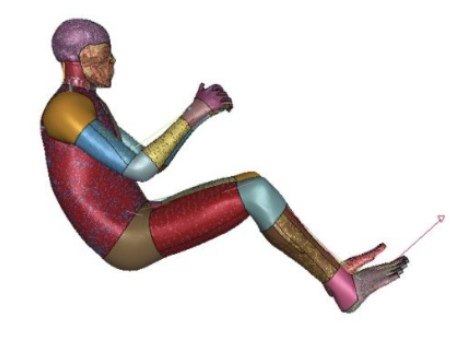
Master's Thesis Explores Reduced-Order Modeling for Human Body Articulation
A new Master’s thesis developed at the University of Rome Tor Vergata investigates advanced methodologies for the efficient articulation of digital human body models through the integration of reduced-order modeling and mesh morphing techniques.

European Commission highlights the impact of MeDiTATe project: advancing personalised cardiovascular care through Digital Twins
The European Commission has published on CORDIS a new feature article highlighting the achievements and impact of MeDiTATe – Medical Digital Twin for Aneurysm prevention and Treatment, an EU-funded project coordinated by Prof. Marco Evangelos Biancolini, Principal Investigator at the University of Rome Tor Vergata.
Comments