
Aeroelastic Characterization of the VEGA C Launch Vehicle under Ground Wind Loads: EUCASS 2025 Presentation Now Available
 Written by rbfLAB on
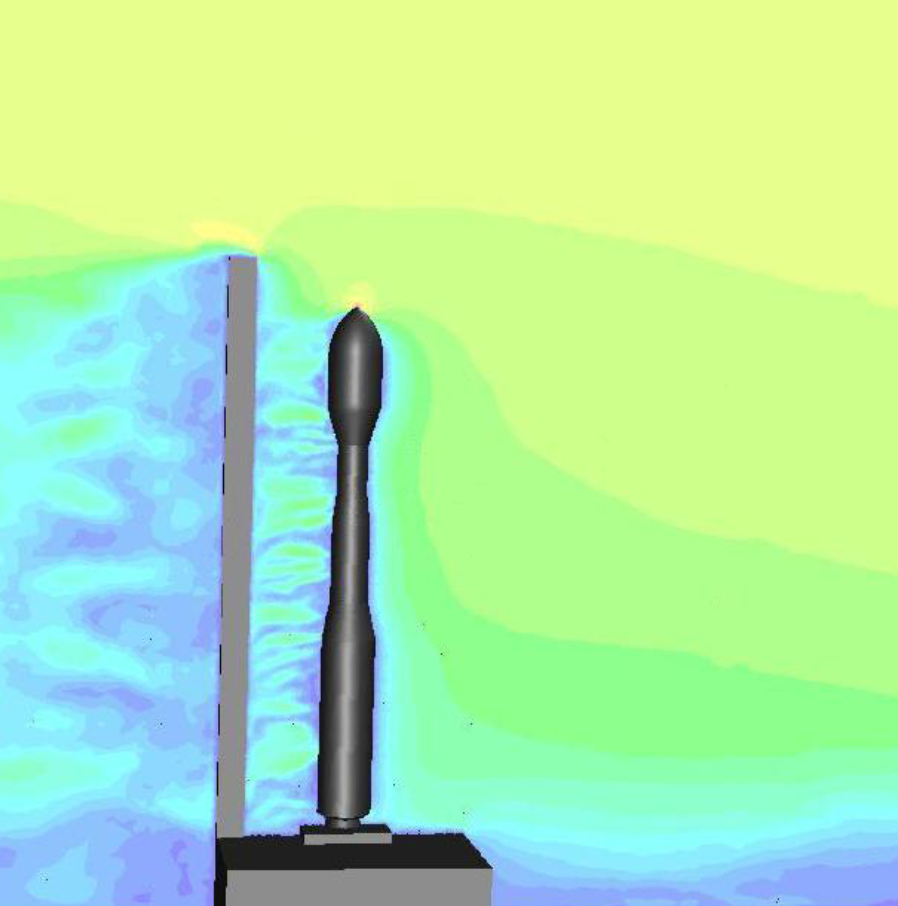
The presentation “Dynamic Response of the VEGA C Launch Vehicle Subjected to Wind Effect on Ground”, delivered at EUCASS 2025, is now available for download. This work represents the outcome of a collaboration between AVIO, RBF Morph, and the University of Rome Tor Vergata, and addresses a critical aspect of launch vehicle safety and performance evaluation: the aeroelastic behavior of the VEGA C launcher exposed to wind loading during ground operations.
The research team consists of Fabio Paglia, PhD (AVIO), Marta Colella (AVIO), Marco Evangelos Biancolini (University of Rome Tor Vergata), and Ubaldo Cella (RBF Morph). Together, they developed and validated a methodology that integrates advanced fluid–structure interaction (FSI) modeling with high-fidelity numerical simulations, specifically tailored for the VEGA C system.
The study builds upon a framework in which AVIO provided the industrial context and validation environment, ensuring alignment with operational requirements. The University of Rome Tor Vergata contributed the theoretical foundation for structural dynamics and modal decomposition, enabling accurate characterization of the launcher’s elastic response under dynamic wind conditions. Complementing these contributions, RBF Morph introduced mesh morphing capabilities that allowed the efficient generation of high-fidelity aerodynamic models, supporting both steady-state and transient FSI analyses.
Methodologically, the work combines Finite Element Analysis (FEA) and Computational Fluid Dynamics (CFD) within a reduced-order modeling (ROM) approach. Structural response is reconstructed using a modal superposition technique, which is then employed to drive aerodynamic simulations based on a library of precomputed, morphologically adapted CFD meshes. This coupling ensures consistency between structural and aerodynamic domains while achieving significant reductions in computational cost.
By projecting the system dynamics onto a limited number of modal coordinates, the ROM strategy enables rapid yet accurate prediction of wind-induced dynamic loads. Such efficiency is crucial for scenarios where repeated evaluations are necessary, for instance in safety assessments, operational planning, and certification workflows. The presentation provides detailed numerical demonstrations, outlines the validation campaign, and introduces a structured workflow that could be extended to future launcher programs.
The complete presentation is accessible through the following link.
rbfLAB
rbfLAB is a research group located in Rome, at the University of Rome 'Tor Vergata'.
Explore more like this

Roma Tor Vergata takes second place at Formula SAE Italy 2026
The University of Rome Tor Vergata achieved an outstanding result at the 21st edition of Formula SAE Italy, held at the “R. Paletti” Autodrome in Varano de’ Melegari, in the province of Parma.
Master's Thesis Explores Reduced-Order Modeling for Human Body Articulation
A new Master’s thesis developed at the University of Rome Tor Vergata investigates advanced methodologies for the efficient articulation of digital human body models through the integration of reduced-order modeling and mesh morphing techniques.

European Commission highlights the impact of MeDiTATe project: advancing personalised cardiovascular care through Digital Twins
The European Commission has published on CORDIS a new feature article highlighting the achievements and impact of MeDiTATe – Medical Digital Twin for Aneurysm prevention and Treatment, an EU-funded project coordinated by Prof. Marco Evangelos Biancolini, Principal Investigator at the University of Rome Tor Vergata.
Comments