
Publication Announcement: A New Analytical Approach to Elastic–Plastic Threaded Connection Modeling
 Written by rbfLAB on

We are pleased to announce the publication of a new peer-reviewed article in Applied Mechanics:
Title: A Fast Analytical Method for Elastic–Plastic Analysis of Threaded Connections
Authors: Carlo Brutti, Corrado Groth, and Marco Evangelos Biancolini
Published in: Applied Mechanics, 2025, Volume 6, Article 42
Abstract
Threaded connections are integral to the design of mechanical structures, yet their response in the elastic–plastic regime remains analytically elusive. The authors present a novel extension of Maduschka’s classical method, enabling fast, accurate prediction of the nonlinear load distribution in screw–nut–washer assemblies. Unlike finite element models (FEM), which are commonly used for such analysis but often limited to case-specific scenarios, this new method offers a computationally efficient alternative suitable for general application.
By integrating the effects of plastic strain progression, from initial yielding to full plasticization, the model provides insights into thread compliance and the evolving stress state. Validation against both axisymmetric and full 3D FEM simulations across ISO thread sizes (M16–M36) confirms the method’s robustness, with results deviating less than 5% from high-fidelity models. Moreover, the approach is resilient to variations in friction, thread geometry, and engagement number, underscoring its utility for reduced-order modeling and digital twin frameworks.
Key Contributions
This study offers a theoretical enhancement of Maduschka’s 1936 method to include elastic–perfectly plastic behavior. It provides an analytical formulation for predicting initial and full yield states at thread roots and introduces a numerical scheme for adapting thread compliance as plastic deformation progresses. The method was extensively validated through comparisons with both numerical and experimental results, consistently demonstrating strong agreement with deviations under 5%. Its computational efficiency and accuracy make it suitable for integration into large-scale finite element simulations and structural health monitoring platforms.
Significance
This work addresses a longstanding gap in the theoretical modeling of threaded connections under high loads. While FEM remains the standard for detailed stress analysis, the proposed method fulfills the need for a fast, generalizable, and analytically grounded predictive tool. It is especially relevant for digital twin implementations and real-time structural assessment applications where computational efficiency is critical.
For full access to the article, including the complete analytical derivation, validation datasets, and comparative results, please refer to the publication here.
rbfLAB
rbfLAB is a research group located in Rome, at the University of Rome 'Tor Vergata'.
Explore more like this

Roma Tor Vergata takes second place at Formula SAE Italy 2026
The University of Rome Tor Vergata achieved an outstanding result at the 21st edition of Formula SAE Italy, held at the “R. Paletti” Autodrome in Varano de’ Melegari, in the province of Parma.
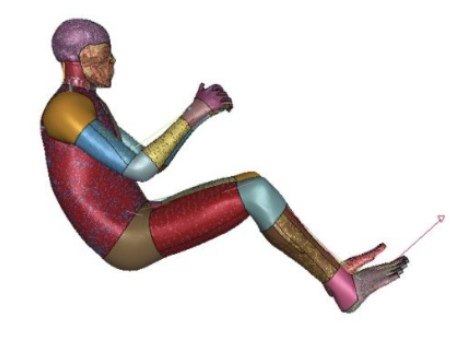
Master's Thesis Explores Reduced-Order Modeling for Human Body Articulation
A new Master’s thesis developed at the University of Rome Tor Vergata investigates advanced methodologies for the efficient articulation of digital human body models through the integration of reduced-order modeling and mesh morphing techniques.

European Commission highlights the impact of MeDiTATe project: advancing personalised cardiovascular care through Digital Twins
The European Commission has published on CORDIS a new feature article highlighting the achievements and impact of MeDiTATe – Medical Digital Twin for Aneurysm prevention and Treatment, an EU-funded project coordinated by Prof. Marco Evangelos Biancolini, Principal Investigator at the University of Rome Tor Vergata.
Comments